
Every year, along the streets of Kemiren Village, Glagah District, Banyuwangi, thousands of tumpeng (cone-shaped rice dishes) line up in front of residents' homes, ready to be shared and eaten together by the entire village. This scene is the embodiment of Tumpeng Sewu — a gratitude tradition inherited from Using ancestors, preserved across generations long before it became widely known as a Banyuwangi cultural tourism attraction.
This article covers the tradition's origins, how its procession unfolds, and the meaning behind each element that accompanies it.
Origins Rooted in a Farmer's Vow
Interestingly, Tumpeng Sewu wasn't born in the form it takes today. Before Kemiren Village became a settlement as it is now, this area was once gardens and rice fields. The community at that time made a vow: if their gardens produced an abundant harvest, they would hold a pecel pitik selametan (thanksgiving feast) as an expression of gratitude.
This tradition was originally known as "Selametan Kampung" (Village Thanksgiving), initially held in groups on different days by individual residents, rather than all at once as it is today.
A Turning Point in 2007
A major change occurred in 2007, after Kemiren Village was officially designated an Osing Customary Tourism Village. All institutions within the village agreed to combine the selametan into a single shared day, held during the month of Dzulhijjah, close to Eid al-Adha.
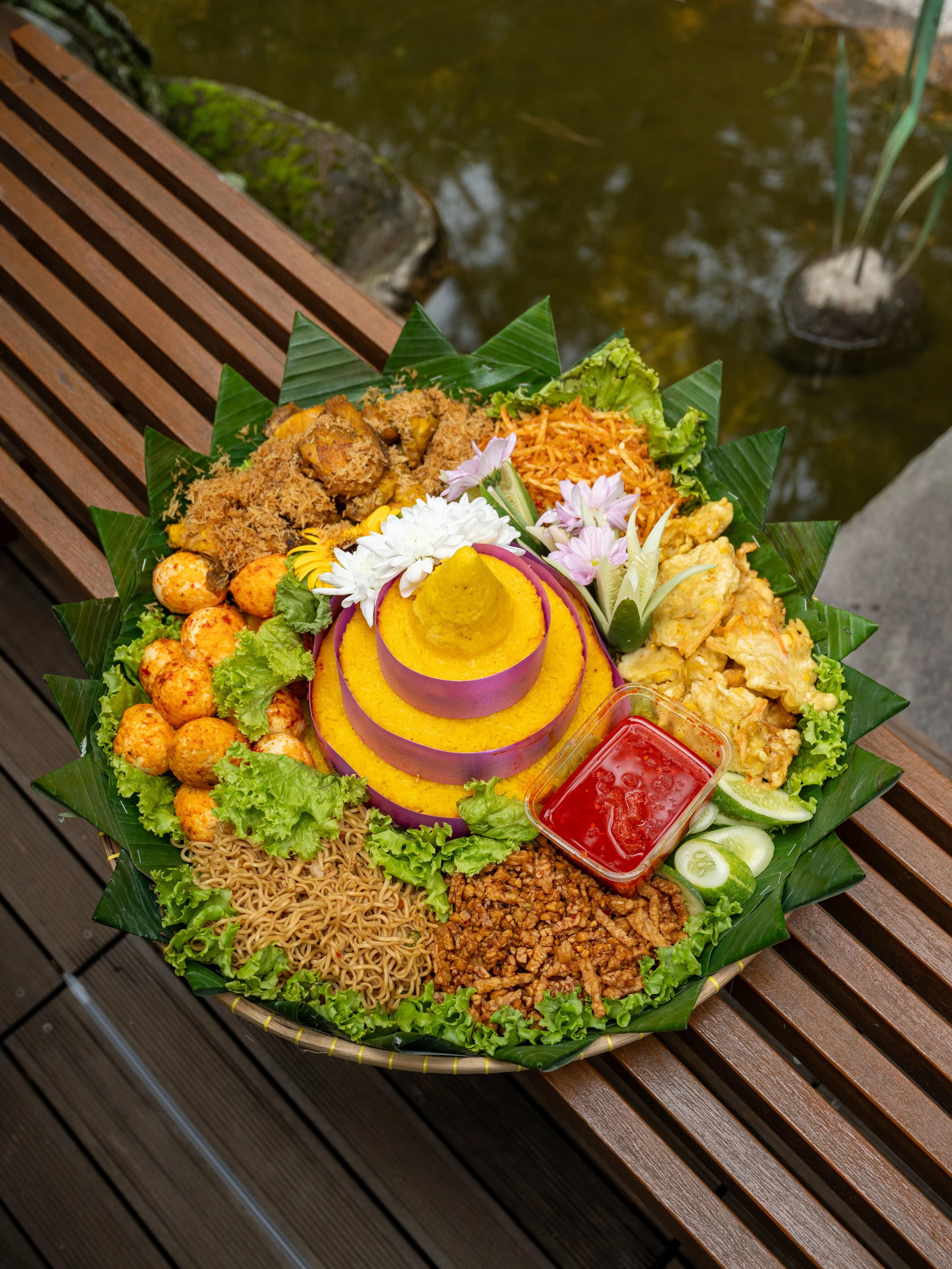
With this merger, the tradition's name also changed from "Selametan Kampung" to Tumpeng Sewu, referencing the number of tumpeng prepared by residents — every household (KK) is required to prepare at least one tumpeng. With around 1,100 households in Kemiren Village, the total number of tumpeng gathered exceeds a thousand, hence the name Tumpeng Sewu (Thousand Tumpeng).
A Procession That Begins at an Ancestral Grave
The Tumpeng Sewu procession begins with a communal prayer at the gravesite of Buyut Cili, a revered ancestral figure for the people of Kemiren Village. Residents believe that if they make a request while promising to hold a selametan at Buyut Cili's grave, that promise must be fulfilled once their request is granted — a belief that forms one of the spiritual roots of this tradition.
Another distinctive feature of this procession is the blue fire torch, taken directly from Ijen Crater as the very first flame lit in the event's sequence. Once the torch is lit, all residents simultaneously lay out their own tumpeng in front of their homes to be eaten together — a moment of togetherness that stands as the tradition's centerpiece.
Before eating the tumpeng, residents first offer a prayer led by a village elder, asking that their village be spared from all forms of disaster and disease — making Tumpeng Sewu also function as a misfortune-warding (tolak bala) ritual, or a village-cleansing selametan.
The Meaning Behind Pecel Pitik and the Cone Shape
The contents of the tumpeng in this tradition aren't just ordinary yellow rice. The main dish is pecel pitik, a distinctive Osing dish of grilled chicken mixed with seasoned grated coconut — a dish that serves as this tradition's signature culinary identity.
The cone shape of the rice also carries its own philosophical meaning: symbolizing guidance to continually devote oneself to the Creator, while also serving as a reminder of humanity's obligation to love one another and preserve the surrounding natural environment.
More Than Just a Communal Meal
According to academic research published in the Baradha journal (Surabaya State University), Tumpeng Sewu is categorized as a form of semi-oral folklore alive in Kemiren Village, with its primary purpose being an expression of the community's gratitude to God for the blessings bestowed upon their village.
Another study published in a Surabaya State University education journal further confirms that Tumpeng Sewu is not merely an ordinary communal meal ritual, but a means of reinforcing values of blessing, gratitude, safety, and togetherness among residents — values now also upheld by the local Pokdarwis (Tourism Awareness Group) as both manager and guardian of this tradition's continuity amid Banyuwangi's growing cultural tourism.
Preservation Challenges in the Modern Era
Despite ongoing preservation efforts, this tradition isn't free from the challenges of the times. Several studies note that globalization, cultural commercialization, and declining interest among younger generations pose real challenges to Tumpeng Sewu's future continuity. Even so, the people of Kemiren Village remain consistent in upholding this tradition every year as an inseparable part of Using cultural identity.
Frequently Asked Questions
What is Tumpeng Sewu?
Tumpeng Sewu is an annual thanksgiving tradition of the Osing community in Kemiren Village, Banyuwangi. Every household prepares at least one tumpeng to be shared with neighbors as an expression of gratitude and a prayer for safety.
Where did the Tumpeng Sewu tradition originate?
The tradition originated from a farmers' vow to hold a thanksgiving feast with pecel pitik if their harvest was abundant. It later evolved into the large communal celebration known today.
What was the tradition called before Tumpeng Sewu?
It was originally known as Selametan Kampung, where residents held separate thanksgiving gatherings on different days.
Why is it called Tumpeng Sewu?
The name means "One Thousand Tumpeng" because every household prepares at least one tumpeng. With more than 1,000 households participating, the total exceeds a thousand.
Who is Buyut Cili?
Buyut Cili is a respected ancestral figure in Kemiren Village. The ritual traditionally begins with communal prayers at his gravesite before the village celebration starts.
What is unique about the torch used during the ceremony?
The opening torch is traditionally lit using the famous blue fire from Ijen Crater, symbolizing the beginning of the Tumpeng Sewu procession.
What is pecel pitik?
Pecel pitik is a signature Osing dish made from grilled chicken mixed with seasoned grated coconut. It is the main dish served alongside the tumpeng.
What does the cone-shaped tumpeng symbolize?
The cone shape represents devotion to God while reminding people to care for one another and preserve nature.
When is Tumpeng Sewu celebrated?
The tradition is held annually during the Islamic month of Dzulhijjah, shortly before or around Eid al-Adha.
Is Tumpeng Sewu only a communal meal?
No. Besides being a communal feast, it is also considered a village cleansing and misfortune-warding ritual that strengthens unity among residents.
What challenges does Tumpeng Sewu face today?
Like many traditional ceremonies, it faces challenges from globalization, commercialization, and declining interest among younger generations, although local communities continue to preserve it.
Can tourists attend Tumpeng Sewu?
Yes. Visitors are welcome to witness the celebration in Kemiren Village and experience one of Banyuwangi's most important cultural traditions while respecting local customs.
Tumpeng Sewu proves how a simple vow made by farmers in the past could grow into a grand tradition uniting a thousand households in a single moment of shared gratitude. From the prayer at Buyut Cili's grave to the blue fire torch of Ijen Crater, every element within this tradition carries meaning that makes it far more than an ordinary communal meal — it's a reflection of the identity and togetherness the Using community continues to uphold today. Want to learn more about the community that keeps this tradition alive? Read Getting to Know the Osing Tribe: The Original Identity of Banyuwangi's People, or explore another sacred tradition from the same village in The Seblang Ritual: A Sacred Dance to Ward Off Misfortune from the Osing People.