
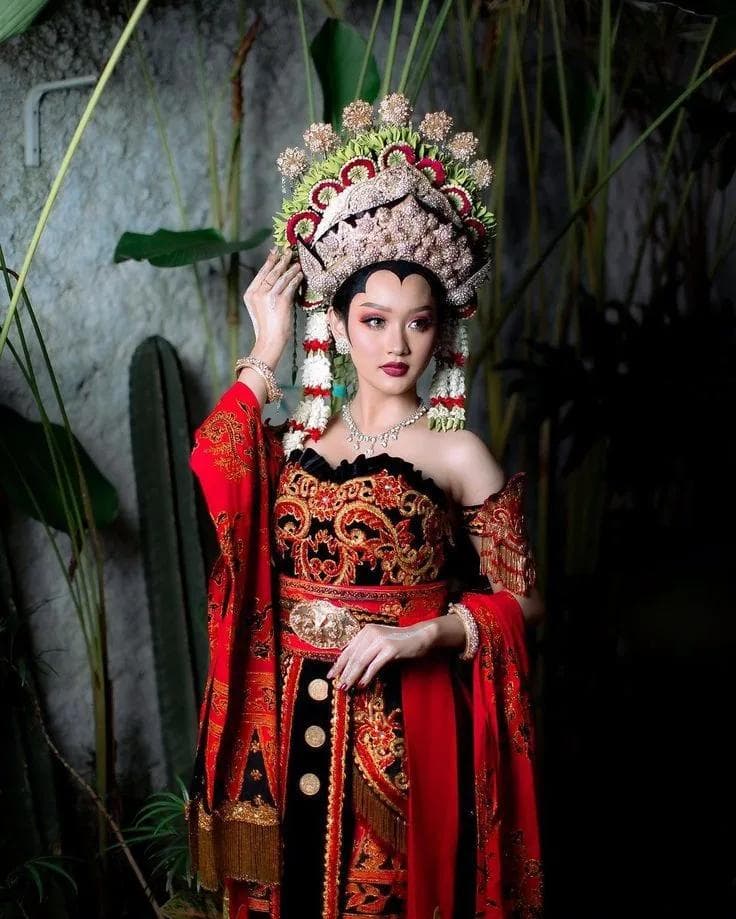
An Osing traditional wedding is far more than a ceremony uniting two people — it's a long sequence rich with symbolism, where every stage, every item carried, even the shape of the house where the reception is held, carries its own philosophical meaning. Unlike modern weddings that tend toward simplicity, Osing traditional weddings are rich with dance, music, elaborate attire, and a series of rituals that make the event a deeply layered cultural performance.
This article covers the stages of an Osing traditional wedding, particularly as still preserved in Kemiren Village, along with the philosophy behind them.
Three Types of Pre-Wedding Traditions
Before entering the core procession, the Osing community recognizes three types of pre-wedding traditions, each with a different context:
- Angkat-angkatan — the formal proposal process, where the groom's family officially conveys their intent to the bride's family
- Kawin colong — a form of marriage conducted without a prior formal proposal, usually for specific reasons agreed upon by both families
- Ngleboni — another type of pre-wedding tradition also recognized in Osing custom
Interestingly, since the Osing community is spread across various parts of Banyuwangi, each village has its own way of carrying out wedding customs. For example, in Lemahbang Dewo Village, Rogojampi District, there's a specific tradition called "Perang Bangkat Marriage," which has unique requirements such as bringing a cormorant bird and undergoing the "memeras suwun" ritual — a variation showing the rich diversity found even within the Osing community itself.
The Full Procession in Kemiren Village
Based on research published in the Jurnal Tata Rias (Surabaya State University), which involved a direct interview with Bapak Suhaimi, the customary elder of Kemiren Village, the Osing traditional wedding procedure in this village consists of the following sequence:
- Ngirim doa — sending prayers to open the event sequence
- Mbuka terop — opening the tent/canopy, marking the start of preparations
- Mocoan lontar Yusuf — reading the lontar (palm-leaf manuscript) story of Prophet Yusuf, believed to bring blessing and serve as a prayer for the couple's safety
- Akad nikah — the marriage vow itself, the core of the wedding
- Sedekahan — almsgiving as an expression of gratitude
- Arak-arakan or surup — a procession requiring several specific items, such as godong kolang-kaling, bokor kinangan, peras suhun, bokor kendi, picis punjen, petek ngerem, cingkek, and bantal kloso
- Petekan — a follow-up stage within the procession sequence
- Ngosek Ponjen — a special ritual that serves as one important point in the procession
- Hiburan — an artistic performance as part of the celebration
- Mbuang kuro — the closing ritual of the entire ceremony sequence
Every item carried during the procession isn't just decorative — each is a symbol rich with meaning, reflecting prayers and hopes for the household life the couple is about to begin.
The Philosophy of Traditional Houses in the Context of Marriage
One of the most fascinating aspects of Osing traditional weddings is its connection to the Osing traditional house. According to Kemiren's customary elder, Suhaimi, the Osing traditional house comes in three building forms, each with a different philosophy: Crocogan (two roofs), Tikel Balung (four roofs), and Baresan (three roofs) — which, when placed in sequence, form a continuous narrative about the journey of marriage.
- Crocogan — derived from the word "kecocogan" (compatibility), symbolizing the early stage where the couple gets to know each other and finds compatibility
- Tikel Balung — this four-roofed house carries deep philosophy related to engagement, since it involves both sets of the couple's parents, who together number four people, matching the number of soko (main pillars) in this house. The jait section (the connecting beam between pillars) symbolizes the meeting of two families in marriage, while the lambang section (the wooden beam above the jait) means "weighed and considered" — a reminder that both families must carefully consider the seriousness of the relationship before proceeding to marriage
- Baresan — means "beres" or finished, symbolizing that the entire marriage process is complete and hoped to run smoothly for a lifetime
This philosophy shows that for the Osing community, a house is more than a dwelling — it's a physical representation of the emotional and social journey of a marriage itself.
Preservation Efforts Amid Modern Times
Amid the trend toward simpler, more practical modern weddings, the Osing community in several villages still upholds the kawin upek-upekan tradition — marriages conducted between members of the Osing community without abandoning the customary procession passed down through generations.
Banyuwangi's local government also plays an active role in this preservation, partly through training programs for makeup artists and traditional cloth makers, ensuring the skills needed to carry out this procession remain available for future generations.
More Than Just a Ceremony
Osing traditional weddings show that marriage isn't just about two individuals — it's the union of two families, two histories, and two sets of hope, celebrated through rich symbolism. From the lontar Yusuf recited as a prayer for safety, to the house shape representing the stages of a relationship, every detail in an Osing traditional wedding teaches that the journey toward marriage matters just as much as the marriage itself.
Frequently Asked Questions
What are the three types of pre-wedding traditions in Osing custom?
The three pre-wedding traditions are angkat-angkatan (formal proposal), kawin colong (marriage without a formal proposal), and ngleboni, each performed under different circumstances.
What is kawin colong?
Kawin colong is a traditional Osing marriage conducted without a formal proposal beforehand, usually based on mutual agreement between both families.
What is the Perang Bangkat marriage tradition?
Perang Bangkat is a unique Osing wedding tradition from Lemahbang Dewo Village that includes distinctive rituals such as bringing a cormorant bird and performing the memeras suwun ceremony.
What is mocoan lontar Yusuf?
It is the recitation of the Story of Prophet Yusuf from a lontar manuscript, performed to seek blessings and pray for the newlyweds' safety and happiness.
What ceremonial items are used during an Osing wedding?
The procession includes symbolic items such as godong kolang-kaling, bokor kinangan, peras suhun, bokor kendi, picis punjen, petek ngerem, cingkek, and bantal kloso.
What is Ngosek Ponjen?
Ngosek Ponjen is one of the important ritual stages within the Osing wedding procession in Kemiren Village.
What is mbuang kuro?
Mbuang kuro is the final ritual that marks the official closing of the Osing traditional wedding ceremony.
How are Osing traditional houses connected to marriage?
The three traditional house types—Crocogan, Tikel Balung, and Baresan—symbolize the journey of marriage, from compatibility and engagement to a complete and harmonious household.
What does the Tikel Balung house symbolize?
Tikel Balung symbolizes the engagement stage, with its four main pillars representing the involvement of both families in supporting the marriage.
What do Crocogan and Baresan mean?
Crocogan represents compatibility between the couple, while Baresan symbolizes a marriage that is complete, stable, and expected to last for life.
What is kawin upek-upekan?
Kawin upek-upekan is an Osing marriage tradition performed between members of the Osing community while maintaining the complete customary wedding rituals.
How is the Osing wedding tradition being preserved?
The Banyuwangi government supports preservation through training programs for traditional makeup artists, artisans, and cultural practitioners to keep the wedding traditions alive.
Osing traditional weddings prove that behind every procession and item that may seem purely ceremonial lies deep philosophy about sincerity, family unity, and hope for a lasting household life — even etched into the physical form of the traditional house that serves as the celebration's backdrop. Want to learn more about the community that preserves this tradition? Read Getting to Know the Osing Tribe: The Original Identity of Banyuwangi's People, or explore another gratitude tradition from the same community in Tumpeng Sewu: An Ancestral Gratitude Tradition of the Using People.