
If you only have limited time in Banyuwangi and have to pick just one creative activity to try, this question is bound to come up: is it better to try eco print or batik making? Both produce beautifully patterned fabric, but the processes are quite different — and one might suit your learning style better than the other.
This article compares the two in terms of process, difficulty level, time required, and the type of experience each offers, so you can decide which is the better first pick as a beginner.
The Difference in Basic Process
Before comparing difficulty levels, it's worth understanding that these two techniques come from entirely different philosophies:
Batik making is a wax-resist technique — you draw a pattern using hot wax through a canting, dye the fabric, then melt away the wax to reveal the design. Every motif is fully controlled by your own hand, line by line.
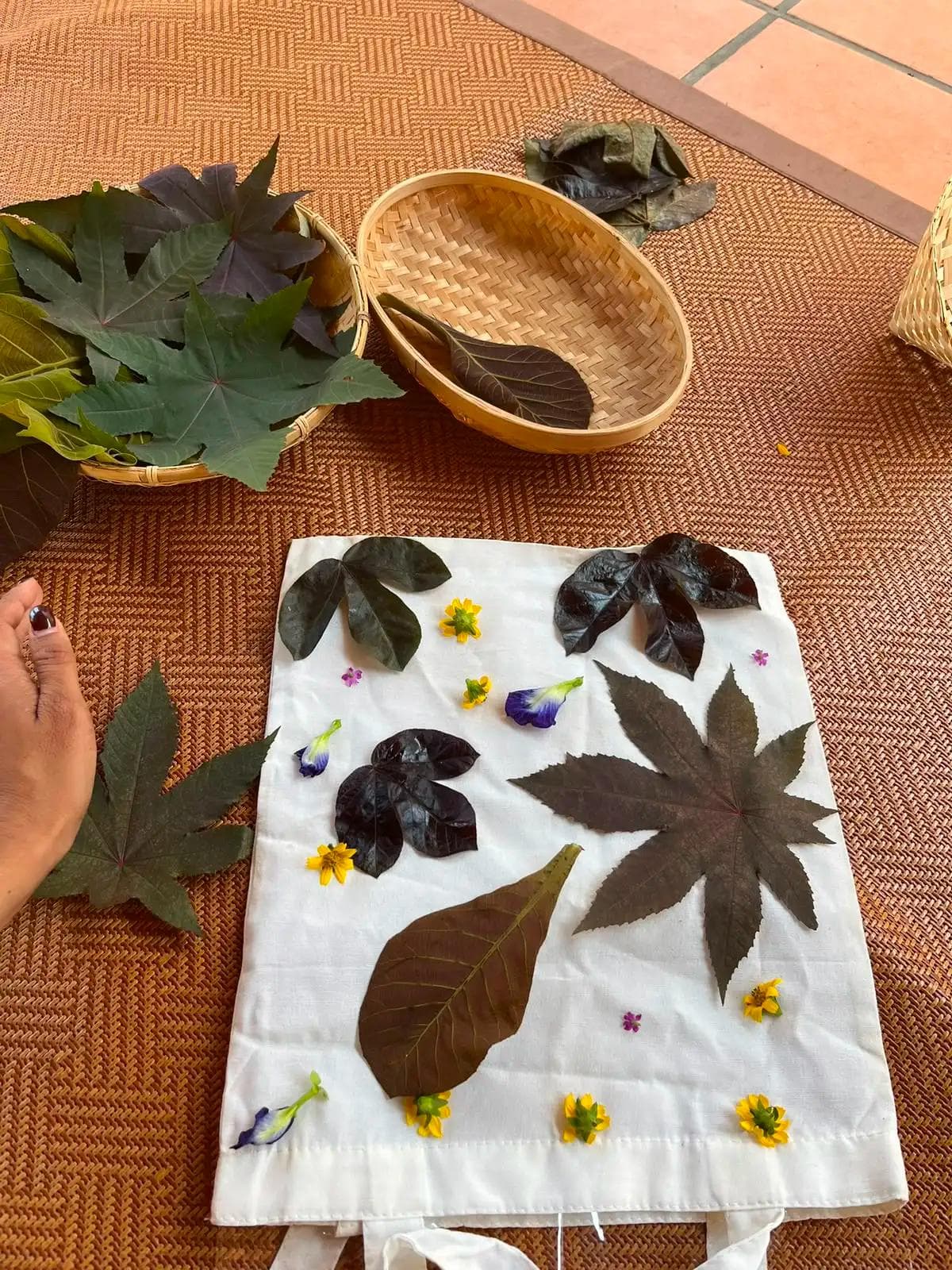
Eco print is a natural transfer technique — you arrange leaves and flowers on fabric, either pounding them or rolling and steaming them, then letting the plants' natural pigments form the pattern themselves. Here, you direct the composition, but the final result is shaped somewhat by the "surprise" of how the leaves naturally react with the fabric.
Difficulty Level for Beginners
In terms of technical difficulty, eco print is generally more beginner-friendly. Arranging leaves and flowers on fabric doesn't require the fine motor skill that drawing with a canting demands — even someone who's never held an art tool before can produce something aesthetically pleasing just by arranging leaves intuitively.
Batik making, on the other hand, requires more patience and a steadier hand. The canting needs to be tilted at just the right angle so the wax flows in a thin, controlled line — any hesitation usually shows up as a blob or a broken line. This doesn't mean batik can't be enjoyed by beginners, but the learning curve is somewhat steeper on the first try.
Comparing Time Required
In terms of duration, both activities are fairly comparable:
- A batik workshop typically runs 2–3 hours, depending on the complexity of the motif and the size of the fabric
- An eco print session usually takes 2–4 hours, including steaming time that can range from 30 minutes to a few hours depending on the desired color intensity
The key difference lies in the pacing. Batik demands you stay focused and actively drawing throughout the session, while eco print has a fairly long "waiting" pause during steaming — this time is usually spent relaxing or chatting, making eco print feel a bit more laid-back overall.
The Type of Experience Each Offers
If you're looking for an experience with fully predictable, controllable results, batik making offers its own kind of satisfaction, since every stroke is a conscious decision you make. You can pick a meaningful motif like Gajah Oling and see it through exactly as planned from start to finish.
If you enjoy a process with an element of surprise and connection to nature, eco print offers something different — you arrange the composition, but the final result only truly reveals itself once the fabric is unrolled after steaming, and no two results are ever quite the same.
Which Should You Try First?
If this is truly your first time trying any fabric-based craft and you want a relaxed experience without the pressure of a "perfect" outcome, eco print is the friendlier entry point. But if you're drawn to deeper cultural meaning and don't mind a bit of a technical challenge, batik offers a more meaningful experience, especially given its direct ties to the history and identity of the Osing tribe in Banyuwangi.
The good news is you don't have to choose just one. At Sekar Jagad Batik & Creative Hub, both sessions can be tried in a single visit, giving you a full picture of two different approaches within Banyuwangi's textile art world.
Frequently Asked Questions
What's the main difference between eco print and batik making?
Batik making uses a wax-resist technique with hot wax and a canting tool to create controlled patterns, while eco print transfers the natural shapes and pigments of leaves and flowers onto fabric through pounding or steaming, producing more organic and unpredictable designs.
Which is easier for beginners, eco print or batik making?
Eco print is generally easier for beginners because it doesn't require the precision and hand control needed when using a canting to draw with hot wax.
How long does a batik workshop usually take?
A beginner batik workshop typically lasts between two and three hours, depending on the complexity of the motif and the size of the fabric.
How long does an eco print session usually take?
Most eco print workshops take around two to four hours, including the preparation, bundling, and steaming process.
Are eco print results fully predictable?
No. While participants decide how to arrange the leaves and flowers, the final patterns and colors depend on how the natural pigments react during the steaming process.
Does batik making require more patience than eco print?
Yes. Batik making requires careful attention and steady hand movements because every line is drawn manually using a canting and hot wax.
Which activity is more suitable for children?
Both activities can be enjoyed by children with supervision, but eco print is generally more beginner-friendly because it doesn't require handling hot wax or a canting tool.
Can I try both activities in one visit?
Yes. Sekar Jagad Batik & Creative Hub offers both batik workshops and eco print sessions, allowing visitors to experience two different textile techniques in a single visit.
Which activity has a stronger connection to Banyuwangi's cultural heritage?
Batik making has a deeper historical and cultural connection, particularly through iconic motifs such as Gajah Oling, which are closely associated with the Osing community and Banyuwangi's identity.
Is eco print more environmentally friendly than batik making?
Eco print is often considered more environmentally friendly because it primarily uses natural leaves, flowers, and plant pigments instead of synthetic dyes.
Which activity creates a more personal souvenir?
Both produce meaningful keepsakes. Batik reflects your own hand-drawn creativity, while eco print creates one-of-a-kind botanical patterns that can never be exactly duplicated.
Should beginners choose one before trying the other?
Not necessarily. Many visitors begin with eco print to get comfortable working with fabric before continuing with a batik workshop for a more detailed and culturally immersive experience.
There's no absolute answer to which is "better" between eco print and batik making — both offer different ways to connect with Banyuwangi's textile art, one through control and precision, the other through surprise and connection to nature. If you're still unsure, the best way to find out which suits you is to try both firsthand. Want to know where to start? Read Batik Workshop Banyuwangi: Learn to Make Batik by Hand, or Eco Print: Turning Leaves and Flowers into Wearable Art for the full picture before deciding.