
Not every beautiful pattern on fabric comes from a brush, a stamp, or a printing machine. Some come straight from the garden. Eco print is one of those techniques that sounds almost too simple to work, yet the results can be genuinely stunning — and it has become a favorite activity for visitors looking for a slower, more hands-on craft experience in Banyuwangi.
This article explains what eco print actually is, the two main techniques behind it, and why the process fits so naturally with Banyuwangi's existing batik community.
What Eco Print Actually Is
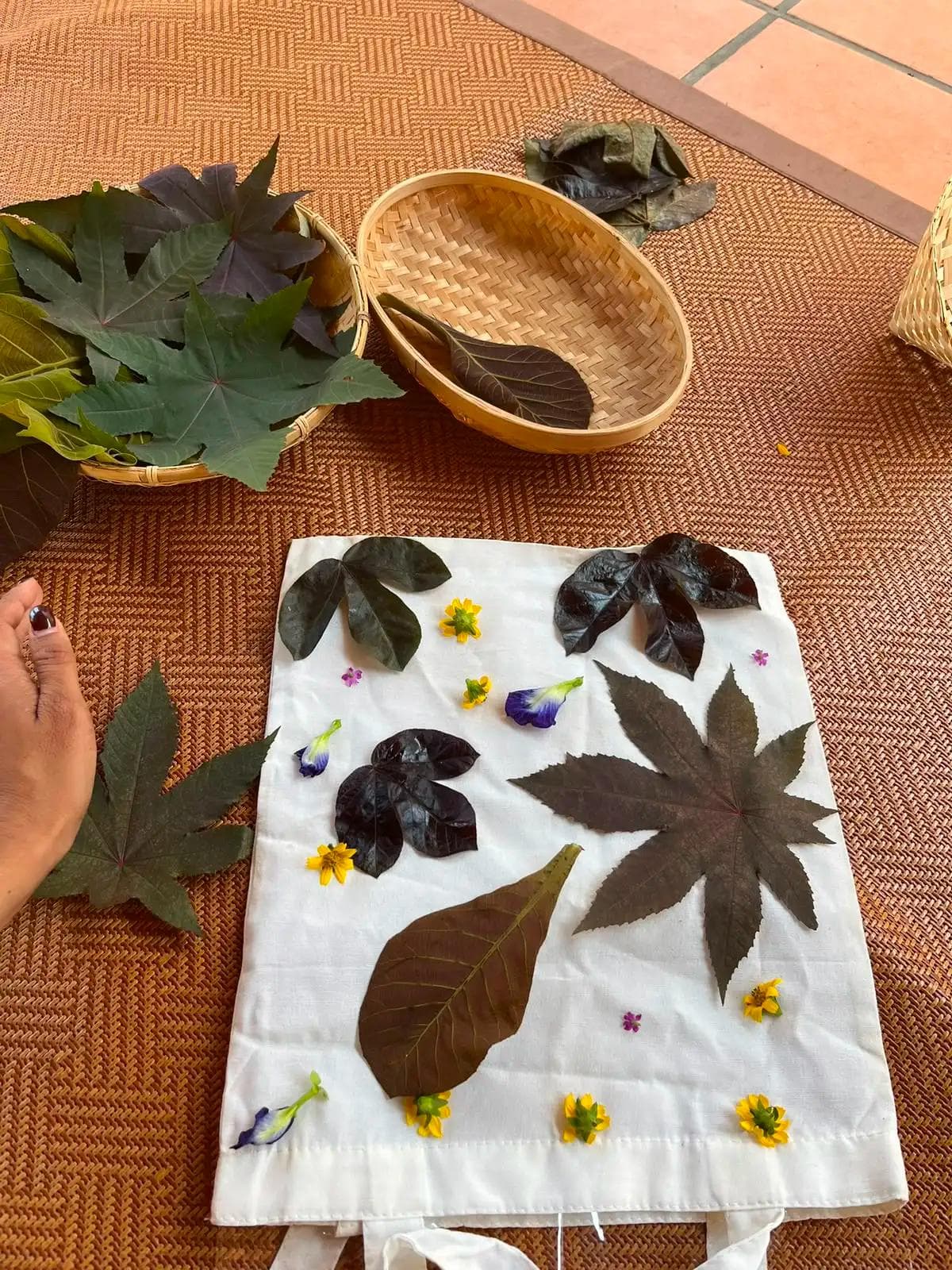
Eco printing is a method of transferring the shape, color, and even the veins of leaves and flowers directly onto fabric. Instead of using synthetic dyes to create a pattern, the plant material itself becomes the source of the design. There are two main eco printing techniques:
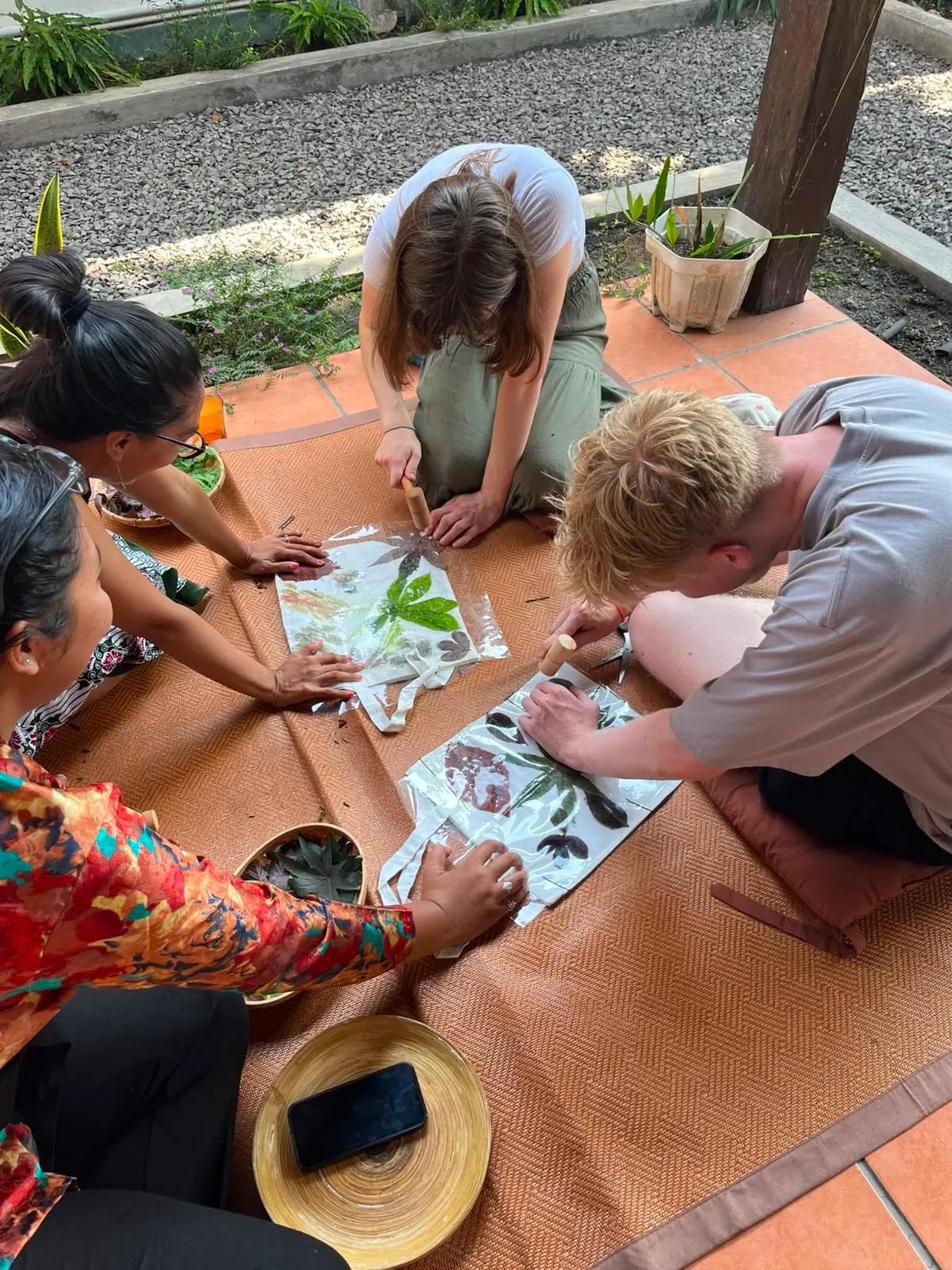
- Pounding — fresh leaves and flowers are arranged on the fabric and gently hammered with a wooden or rubber mallet. This process releases the plants' natural pigments directly into the fibers, creating detailed botanical prints with minimal equipment.
- Steaming — leaves are arranged on the cloth in the desired composition, then the fabric is rolled tightly around a stick or pole, secured with string, and steamed or boiled. During this process, the natural pigments and tannins within the leaves are gradually released, leaving behind their colors, shapes, and delicate vein patterns on the fabric.
Why Some Leaves Work Better Than Others
Not every leaf will leave a strong mark. The best results usually come from leaves rich in tannins, since tannins react with the fabric and any mordant used beforehand to fix the color. Teak leaves are a well-known favorite among practitioners because of their high natural tannin content and reliable, sharp color transfer. In Banyuwangi, workshops sometimes experiment with regional leaves, flowers, and even certain barks, giving each session a slightly different character depending on the season and what is available.
Before printing, fabric usually goes through a process called mordanting, where it is soaked in a solution that helps the natural dye bind properly. Without this step, colors tend to fade quickly or transfer unevenly. This is one of the more technical parts of eco printing, and it is usually handled by the workshop facilitator so participants can focus on the more creative side of the process.
The Bundling and Steaming Process
Once the fabric is prepared, the fun part begins. Leaves and flowers are laid out on the cloth in whatever arrangement you like, whether scattered loosely or placed in a deliberate pattern. To help release more natural pigments and create clearer leaf impressions, the leaves are gently pounded with a wooden or rubber mallet before the fabric is rolled.
After that, the fabric is tightly rolled around a stick or pole, secured firmly with string to keep everything in place, and steamed for anywhere from thirty minutes to a couple of hours, depending on the fabric type and the desired color intensity.
This waiting period is usually where participants get to relax, chat, or explore other parts of the workshop space. When the bundle is finally unrolled for the reveal, there is always a small moment of suspense, since you never quite know how the leaves will have reacted with the fabric until you see it for yourself.
Why Eco Print Fits Banyuwangi So Well
Eco print pairs naturally with the values already present in Banyuwangi's batik community, where sustainability and connection to the local environment matter as much as the final product. Since the technique relies on plant material rather than synthetic dyes, it appeals to visitors who want a craft experience that feels lighter on the environment, without losing any of the creative satisfaction that comes with working on fabric by hand.
At Sekar Jagad, eco print sessions are often positioned as a complement to traditional batik workshops, giving guests two very different ways of understanding textile art in the same visit. One relies on wax and precise linework, the other on nature's own patterns and a bit of controlled chance.
Frequently Asked Questions
What is eco print in simple terms?
Eco print is a natural textile printing technique that transfers the shapes, colors, and vein patterns of leaves and flowers directly onto fabric through steaming or boiling, creating unique botanical designs.
Do I need artistic skill to try eco printing?
No. Eco print is beginner-friendly because the plants create the patterns naturally. Participants simply arrange leaves and flowers on the fabric, making it easy for anyone to produce beautiful one-of-a-kind results.
What type of fabric works best for eco print?
Natural fabrics such as cotton, silk, and linen are the best choices because they absorb natural pigments much better than synthetic materials, resulting in clearer and longer-lasting prints.
What is mordanting, and why is it necessary?
Mordanting is the process of soaking fabric in a special solution before printing. It helps natural pigments bond with the fibers, producing stronger colors and improving the durability of the final design.
How long does an eco print workshop usually take?
Most eco print workshops last between two and four hours, including fabric preparation, leaf arrangement, bundling, steaming, and the final reveal of the printed fabric.
Is eco print considered an environmentally friendly textile technique?
Yes. Eco print uses leaves, flowers, and other natural plant materials instead of synthetic dyes, making it a more sustainable approach to textile decoration when responsibly practiced.
Can eco print be combined with batik on the same fabric?
Yes. Some textile artists combine eco print with batik or other natural dyeing techniques to create layered and more intricate designs. However, this approach is generally suited for experienced practitioners.
Where can I join an eco print workshop in Banyuwangi?
Sekar Jagad Batik & Creative Hub offers eco print workshops alongside traditional batik classes, allowing visitors to experience two distinctive Indonesian textile arts in a single visit.
Eco print proves that textile beauty doesn't always need synthetic dye — just leaves, patience, and a bit of nature's own unpredictability. From the pounding technique to arranging leaves on a tote bag, every step holds its own kind of fun, making eco print a natural complement to the batik tradition Banyuwangi's community has long kept alive.