
If a motif like Gajah Oling gives Banyuwangi batik its visual identity, the colors that bring that cloth to life carry a story of their own. Lately, more and more batik artisans in Banyuwangi have been turning back to the nature growing right around their homes as a source of color — not purely for aesthetics, but as a form of local wisdom aligned with environmental sustainability.
This article looks at why natural dyes matter for Banyuwangi batik, the distinctive local ingredients artisans use, how the dyeing process works, and the support helping this trend keep growing.
Why Natural Dyes Are Being Rediscovered
Before the early 20th century, batik artisans essentially only made hand-drawn batik using dyes sourced from nature, such as teak, mengkudu (noni) trees, soga bark, indigo, tingi, and tegeran. Over time, though, the use of natural dyes was largely abandoned because the process took a long time and the resulting colors tended to fade quickly, pushing many artisans toward synthetic dyes that were cheaper, more practical, and faster to use.
The trouble is, using chemical dyes in batik-making is considered environmentally unfriendly, particularly since the resulting waste flows into soil and water and can damage ecosystems, and carcinogenic substances in some of these chemicals can pose a health risk if they enter the human body. In fact, certain synthetic materials like naptol used in batik-making have actually been banned since 1996. This awareness of the risks is exactly what's pushed artisans in various regions, including Banyuwangi, back toward natural dyes as a safer alternative.
From the Backyard to the Dye Vat: Banyuwangi Artisans' Signature Ingredients
What's striking about the natural dye trend in Banyuwangi is just how local its ingredients are — not imported from elsewhere, but taken from plants growing right around the artisans' own homes. The materials used include krangkong leaves (a type of water spinach), lamtoro leaves, mango leaves, teak, jengkol, coffee husks, ketepeng leaves, sensitive plant (putri malu), and cat's whiskers (kumis kucing).
One artisan, Sri Sukartini, said she had previously been used to producing batik with natural dyes, but the materials she used were limited, so the resulting colors lacked variety. After taking part in intensive training, her knowledge of dye-source plants grew far richer — even leaves that had simply fallen around the house turned out to be usable. Another artisan, Erni Priyatin of Batik Trisno in Cluring District, was similarly surprised to learn that wild grasses and sap-bearing leaves nearby could also serve as dye material, and she now intends to develop batik using natural dyes exclusively, since she considers it more environmentally friendly.
There's something poetic in this fact: the very plants used as dye material are often the same ones that have long inspired Banyuwangi's signature motifs. Coffee husks, for instance, serve as one source of natural color, while also calling to mind the Kopi Pecah motif, which depicts the region's signature coffee harvest. Likewise, krangkong leaves, resembling kangkung (water spinach), echo the philosophy behind the Kangkung Setingkes motif. The very nature that inspires Banyuwangi batik's visual motifs is now also the source of the color that brings it to life.
A Wider Context: The Natural Color Palette of Indonesian Batik
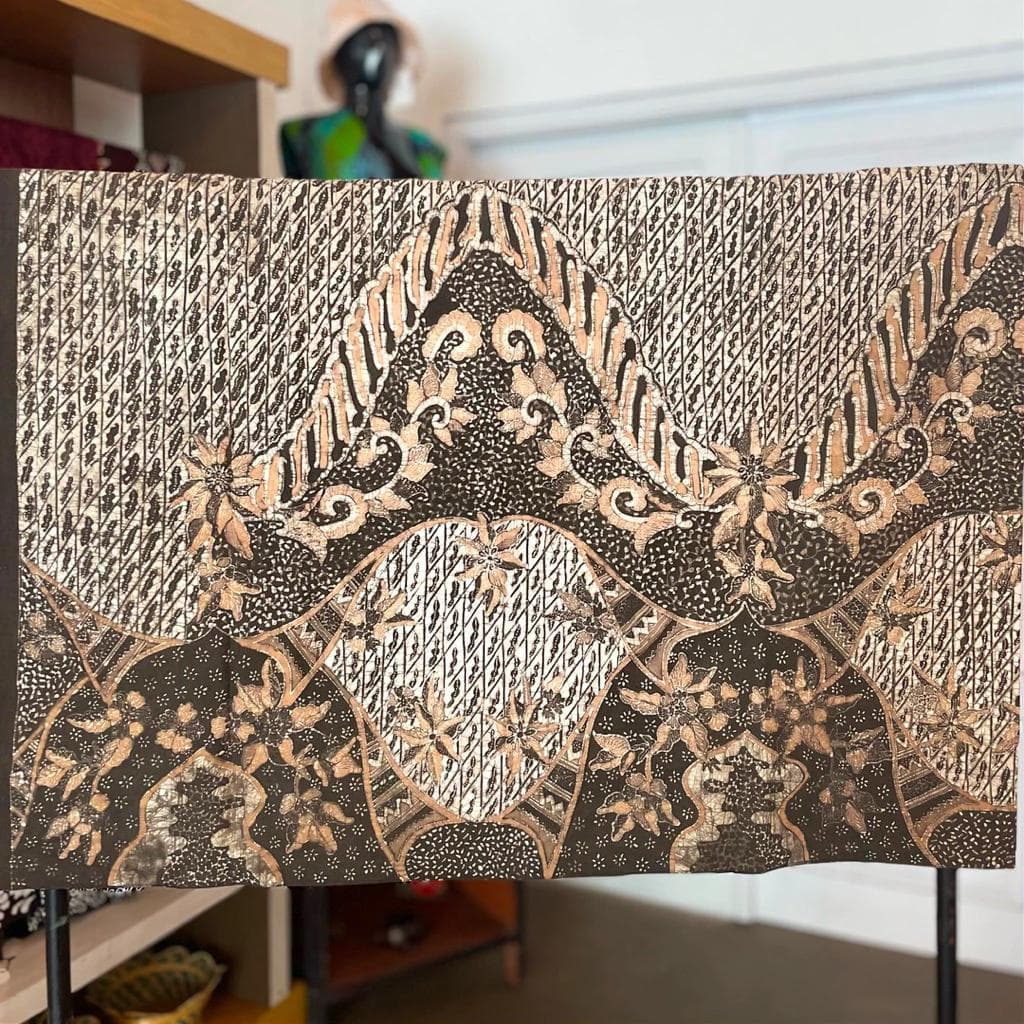
Beyond these distinctive local ingredients, Indonesian batik in general also draws on a set of classic dye-source plants that remain relevant as a reference point for Banyuwangi artisans. Indigo or tarum leaves yield a deep blue through a long fermentation process, mengkudu root and fruit produce a strong, natural red, turmeric gives a bright yellow though it tends to fade quickly, while a combination of tingi bark, jambal, and tegeran wood yields the soga, or brown, tone characteristic of traditional batik. Classic colors like soga brown, indigo blue, or mengkudu red remain iconic in Indonesian traditional batik to this day, and serve as an important reference point before artisans experiment further with Banyuwangi's more specific local ingredients.
How the Natural Dyeing Process Works
Broadly, the natural dyeing process in batik follows several main stages. The extraction stage involves boiling pieces of organic material in water to draw out its pigment. Next comes mordanting, using a binding agent such as alum or lime so the pigment adheres better to the fabric fibers — a crucial step since natural dyes tend to be less durable without a mordant. After that, the fabric is dyed or soaked in stages so the color absorbs evenly, before finally being dried in a shaded spot and gently washed so the color doesn't fade too quickly.
Each material comes with its own challenges. Dyes from roots or bark generally need a fairly long boiling time, while a material like indigo requires repeated dipping, since its blue color only emerges gradually each time the fabric is lifted out of the solution and exposed to air. This character is exactly what gives natural-dye batik its distinctive charm: the resulting colors tend to be soft and organic, and can vary slightly from one dyeing batch to another due to natural factors — an "imperfection" that's actually regarded as adding artistic value.
Training Support and Cultural Festivals
The growth of natural dyes in Banyuwangi hasn't happened in isolation — it's been backed by local government support. The Banyuwangi Regency government brought in national designer Merdi Sihombing to train local batik artisans, most of whom run micro, small, and medium enterprises (MSMEs), in expanding their use of natural dyes while also creating new motifs drawn from the surrounding environment. This training is held periodically as part of the lead-up to the Banyuwangi Batik Festival (BBF) and Swarna Fest, two annual events that serve as a platform for promoting Banyuwangi's signature batik to a wider audience.
During the training, MSME artisans are also taught to apply natural dyes to various types of fabric, from handloom-woven cloth (ATBM), silk, and cotton-silk, to primisima and sari fabric. The economic results have been encouraging: after completing the training, Sri Sukartini, for example, can now sell up to five hand-drawn batik pieces a month, priced between Rp1 and 2 million each — proof that the added value of natural dyes is being felt directly by artisans on the ground.
A Local Wisdom That Is Genuinely Sustainable
The use of natural dyes in Banyuwangi batik demonstrates sustainability across three dimensions at once. Environmentally, natural dyes don't produce synthetic chemical waste that pollutes water and soil, and they're gentler on the skin compared with chemical dyes. Culturally, this practice revives ancestral wisdom that had once been set aside for the sake of convenience, while also reinforcing local identity through the link between dye materials and the motifs they inspire. Economically, natural-dye batik strengthens a product's market value and encourages a more sustainable batik industry, especially amid a global market that's increasingly concerned about sustainability and ethical textile production.
These three dimensions reinforce one another: a healthy environment supplies the dye material, skilled artisans turn it into high-value work, and an increasingly environmentally conscious consumer base opens up market space for these products to keep growing.
Frequently Asked Questions
Why are Banyuwangi batik artisans returning to natural dyes?
Many artisans are switching back to natural dyes because synthetic dyes can produce harmful chemical waste that pollutes soil and water, while natural dyes offer a more environmentally friendly alternative.
What natural materials are commonly used to dye Banyuwangi batik?
Common materials include krangkong leaves, lamtoro leaves, mango leaves, teak leaves, jengkol, coffee husks, ketepeng leaves, sensitive plant leaves, and cat's whiskers plants collected from the local environment.
How are natural dyes connected to Banyuwangi batik motifs?
Some natural dye sources, such as coffee husks and krangkong leaves, come from the same plants that inspire motifs like Kopi Pecah and Kangkung Setingkes, creating a close relationship between color and design.
How is batik dyed using natural colors?
The process generally includes extracting pigment by boiling plant materials, mordanting the fabric to help the dye bond, repeated dyeing, and drying the cloth in the shade before washing it gently.
Why are synthetic dyes considered harmful?
Certain synthetic dyes can release hazardous chemicals into the environment, and some substances formerly used in batik production have been linked to health risks.
What are some traditional natural dye colors used in Indonesian batik?
Classic natural colors include indigo blue from tarum, red from morinda root, yellow from turmeric, and brown soga made from tingi, jambal, and tegeran wood.
Who supports natural dye training for Banyuwangi artisans?
The Banyuwangi Regency Government collaborates with fashion designer Merdi Sihombing to provide regular training programs for local batik artisans.
What are the Banyuwangi Batik Festival and Swarna Fest?
They are annual cultural events that promote Banyuwangi batik while encouraging artisans to develop new motifs and expand the use of natural dyes.
Do natural dyes increase the value of batik?
Yes. Naturally dyed batik often commands higher prices because it appeals to buyers looking for sustainable, handcrafted textile products.
Why do natural dye colors vary from one batch to another?
Natural pigments are influenced by weather, plant conditions, and the dyeing process, making every piece of naturally dyed batik slightly unique.
Can natural dyes be applied to different fabrics?
Yes. Natural dyes can be used on various textiles, including handwoven fabrics (ATBM), silk, silk-cotton blends, primisima cotton, and sari fabrics.
Why are natural dyes considered a sustainable local tradition?
Natural dyes help protect the environment, revive traditional knowledge, and create higher-value batik products that support local artisans and cultural preservation.
Natural dyes in Banyuwangi batik prove that sustainability doesn't always come from new technology — it can also be born from turning back to the wisdom that's long existed right around us: leaves that fall in the backyard, leftover coffee husks from the harvest, and wild grass that grows without being asked to. Every piece of batik dyed with natural materials carries a story about the close relationship between people, nature, and a cultural heritage that continues to be cared for. Want to explore more of the motifs colored by these natural materials? Read Differences Between Banyuwangi Batik and Other Coastal Batik, or explore Collaborative Class Ideas: Batik Workshop That Actually Works.