
After the Puputan Bayu War ended and Blambangan fully fell under VOC control in 1773, this region entered a new chapter as a colonial administrative center. Though that chapter left behind deep historical wounds, it also left physical traces still visible today — from bridges and dams to plantation buildings standing strong despite being over a century old.
This article covers several colonial-era buildings and sites in Banyuwangi still open to visitors, grouped by their original function.
Infrastructure Heritage: Bridges, Dams, and Tunnels
One of the most tangible colonial traces in Banyuwangi is the infrastructure built to support agricultural distribution and irrigation:
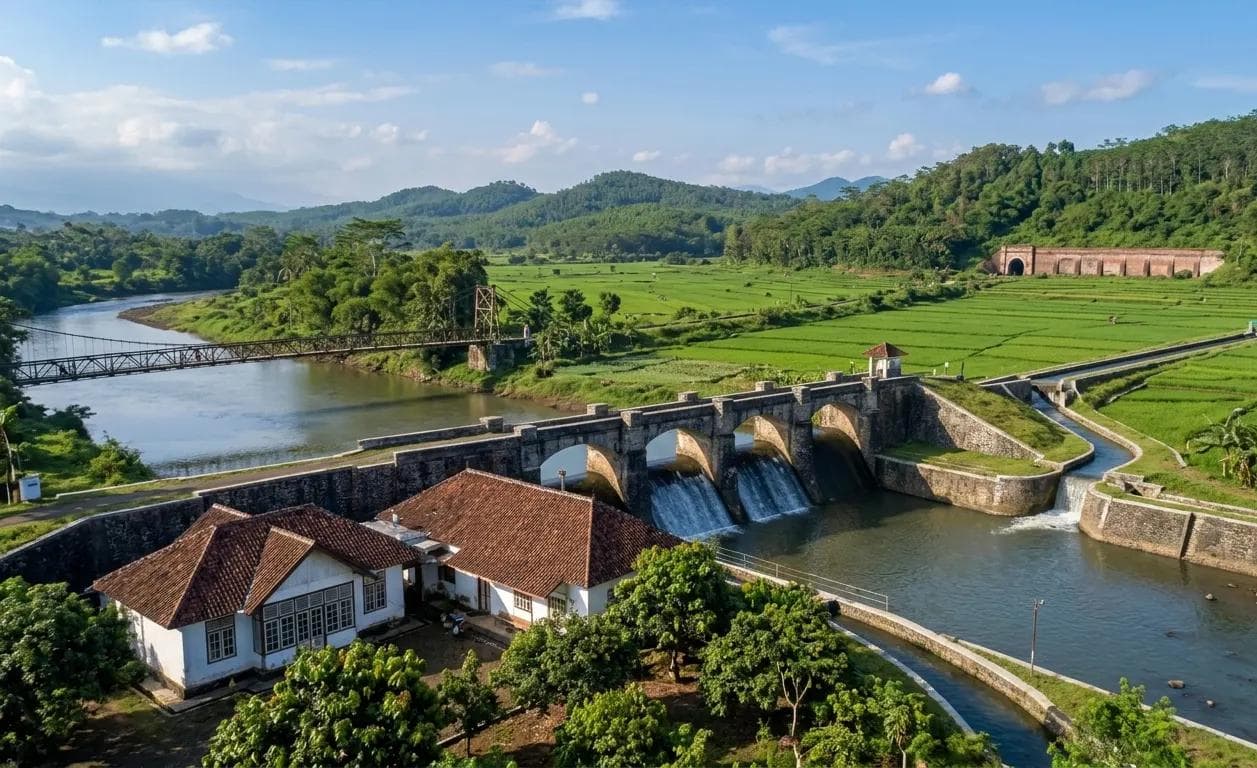
- Sasak Gantung (Hanging Bridge) in Genteng — built in 1926, connecting Maron Hamlet (Genteng Kulon Village) with Jalen Hamlet (Setail Village). It's now a favorite hangout spot for young people to enjoy the view of the Setail River, Banyuwangi's longest river.
- Karangdoro Dam — built in 1921 in Karangmulyo Village, Tegalsari District, with help from water engineering expert Ir. Sutejo. This dam irrigates thousands of hectares of rice fields.
- Singir Dam (Blambangan Dam) — located in Mangunrejo Hamlet, Blambangan Village, Muncar District, inaugurated in 1925 by the Dutch East Indies Colonial Government. To this day, this dam still irrigates channels in 8 villages across Srono and Muncar Districts.
- Mrawan Tunnel — a railway tunnel project refined in 1910 by the Dutch railway company, Staatsspoorwegen (SS).
What's notable about this infrastructure is its still-active function today — not merely dead monuments, but structures that continue irrigating rice fields and sustaining residents' livelihoods, a hundred years after being built.
Plantation and Industrial Heritage
Banyuwangi also holds colonial traces from the plantation sector, once the backbone of the Dutch East Indies economy:
- PT Perkebunan Glenmore — in Margomulyo Village, Glenmore District, visitors can see a historic factory building complete with an old colonial-era locomotive once used to transport cocoa harvests and move plantation workers. This area is open to both local and foreign tourists by filling out a guest book at the security post.
- Van De Boer ("De Bur") — a building at the Kalitelepak Plantation, PTPN XII, Kaligondo Village, Genteng District, which once served as the sugarcane plantation's management office. The name "De Bur" comes from the landowner of that era. Though now in a concerning state, surrounded by overgrown bushes, its grand colonial architecture is still clearly visible — the building is even known among locals for holding mystical stories and attracting treasure hunters.
City Building and Transportation Heritage
In the center of Banyuwangi City, several colonial buildings still stand as witnesses to the city's development:
- Karangasem Station — an old train station built during the Dutch era, once a crucial point for distributing agricultural and plantation produce from East Java toward ports and major cities. Though a new station now exists, Karangasem Station is still preserved and continues serving local train routes.
- The old former Post Office building — a witness to the development of communication during the colonial era. Though modern postal functions have moved to a new building, the old structure still stands and is being considered for cultural heritage status.
- A former Dutch military headquarters building — a building that once served as a colonial military base, later taken over by Indonesian fighters during the independence era — making it a witness to two historical chapters at once: colonization and the struggle for independence.
A Colonial-Flavored City District
Beyond individual buildings, Banyuwangi also has an entire district that largely preserves the Dutch-era urban layout, particularly around Jalan Veteran, Jalan RA Kartini, and the Diponegoro area. In this area, distinctive colonial-era architectural ornaments are still preserved.
Interestingly, Banyuwangi's local government has in recent years pushed an urban heritage approach — balancing historical preservation with modern development. Several restaurants, hotels, and public spaces now adopt old-building elements as part of their interior design and visual branding concepts, reviving this area's classic atmosphere without losing its relevance today.
Sites Bridging the Kingdom and Colonial Eras
Several sites in Banyuwangi also mark the direct transition from the Blambangan Kingdom era to the colonial era:
- Umpak Songo Site — located in Tembokrejo Village, Muncar District, marks one of the points where the Blambangan Kingdom's capital relocated during its war against the VOC in the 18th century. This site leaves behind nine holed stones believed to be the foundation posts of a pendopo (pavilion) building.
- Buyut Cungking's Tomb — located in Penganjuran Subdistrict, a trace of Islam's peaceful spread in Banyuwangi, and still a pilgrimage site for residents today.
Why These Sites Deserve a Visit — and Preservation
These buildings are more than physical structures that have withstood time. Within every corner lies historical value reflecting how Banyuwangi transformed — from the last Hindu kingdom on Java, through a complex colonial chapter, into the modern regency it is today. Keeping these traces standing, while continuing to adapt their function to present-day needs, is how Banyuwangi tends to its collective memory without falling into blind nostalgia for the colonial era itself.
Frequently Asked Questions
What colonial landmarks can still be found in Banyuwangi?
Some of the remaining colonial sites include the Genteng Hanging Bridge, Karangdoro Dam, Singir Dam, Mrawan Tunnel, Glenmore and Van De Boer plantation buildings, Karangasem Station, and the old city district around Jalan Veteran.
When was the Genteng Hanging Bridge built?
The Genteng Hanging Bridge was constructed in 1926 and connects Maron Hamlet in Genteng Kulon Village with Jalen Hamlet in Setail Village.
What is the current function of Karangdoro Dam?
Built in 1921, Karangdoro Dam continues to irrigate thousands of hectares of rice fields in the Tegalsari area.
What is Singir Dam?
Singir Dam, also known as Blambangan Dam, is a colonial-era irrigation dam inaugurated in 1925 that still supplies water to eight villages in Srono and Muncar Districts.
What can visitors see at PT Perkebunan Glenmore?
Visitors can explore a historic plantation factory and an old colonial locomotive once used to transport cocoa harvests and plantation workers.
What is the Van De Boer building?
Van De Boer, locally known as "De Bur," is a former sugar plantation administration building in Kaligondo that still showcases impressive colonial architecture despite its deteriorating condition.
What was Karangasem Station used for during the colonial era?
Karangasem Station served as an important transportation hub for agricultural and plantation products destined for ports and major cities.
Does Banyuwangi's old post office building still exist?
Yes. Although postal services have moved to a newer facility, the original building remains standing and is being considered for cultural heritage status.
Which part of Banyuwangi still has a strong colonial atmosphere?
The areas around Jalan Veteran, Jalan RA Kartini, and Jalan Diponegoro retain much of their Dutch colonial urban layout and architectural details.
What is Banyuwangi's urban heritage approach?
It is a conservation strategy that preserves historic buildings while adapting them for modern uses such as restaurants, hotels, and public spaces.
What is the Umpak Songo Site?
The Umpak Songo Site marks one of the locations where the capital of the Blambangan Kingdom was relocated during its war against the VOC, leaving behind nine stone foundation blocks from a former pavilion.
Why is Buyut Cungking's Tomb significant?
Buyut Cungking's Tomb represents the peaceful spread of Islam in Banyuwangi and continues to serve as an important pilgrimage destination for local residents.
From a hanging bridge still crossed by residents to a plantation building slowly being swallowed by overgrowth, Banyuwangi's colonial traces hold stories far more complex than mere old-architecture romanticism. Each site is a reminder of the historical chapter that shaped Banyuwangi into what it is today — a chapter worth understanding fully, not just admired for its aesthetics alone. Want to understand the chapter of history before this colonial era began? Read Blambangan's Resistance Against the VOC: A Complete Chronology, or The Blambangan Kingdom: Glory and Fall at the Eastern Tip of Java for the full context.